


THE TRUTH ABOUT "PEPTIDES" (SỰ THẬT VỀ "PEPTIT")
- Joanna (Tam) Pham

- Jan 30, 2023
- 8 min read
(Để đọc bản tiếng việt, vui lòng kéo xuống phía dưới)

Peptides are a new trend in the skincare industry nowadays that play a vital role in the functioning of our bodies. They are involved in a variety of processes including the regulation of hormones, cell signaling, and the formation of proteins. In recent years, peptides have become an area of intense research, with scientists exploring their potential applications in a wide range of fields, from medicine to cosmetics. In this article, we will take a closer look at what peptides are in the skincare field, how they work, and some of the most exciting advances in peptide research.
What is Peptide? And why Peptide is important in skincare?
A peptide is a molecule composed of two or more amino acids linked together by peptide bonds. Larger chains of amino acids are called Polly peptides (Hayden). Peptides are the building blocks of proteins and play important roles in many biological processes, including cell signaling, regulation of gene expression, and metabolism (Hayden).
Peptides in skincare refer to small chains of amino acids that are used as ingredients in skincare products. These peptides can signal the skin to produce more collagen, elastin, and other essential skin proteins, leading to a more youthful and radiant appearance. They can improve skin texture, and firmness, and reduce the appearance of fine lines and wrinkles (Hamley, n.d.). Some common types of peptides used in skin care include Matrixyl, Argireline, and palmitoyl pentapeptide. Peptides are a popular ingredient in many skincare products due to their effectiveness in improving skin health and appearance. When applied topically, peptides can penetrate the skin and trigger the desired biological response, making them a highly effective skincare ingredient (Vinson 79).
Is there any clinical proof of the effectiveness of peptides?
Yes, there have been numerous clinical studies that have investigated the effectiveness of peptides in skincare. These studies have shown that peptides can be highly effective in improving the appearance and health of the skin (Kristensen M, and Nielsen HM ).
For example, studies have shown that Matrixyl, a popular peptide used in skincare products, can significantly improve the appearance of fine lines and wrinkles, as well as boost collagen production (Hamley, n.d.). Another peptide, Argireline, has been shown to reduce the depth of wrinkles and improve skin firmness. Palmitoyl pentapeptide has been demonstrated to increase collagen production and improve skin elasticity (Bissett). A most popular peptide called “Copper Peptides” which are used in many skincare products can promote skin health, including promoting collagen production, reducing inflammation, and enhancing wound healing (Kim SH. et al.).
Overall, the results of clinical studies have shown that peptides can be an effective ingredient in skincare and that they can produce significant improvements in skin appearance and texture (Hamley, n.d.). However, as with any skincare ingredient, individual results may vary and more research is needed to fully understand the benefits of peptides in skincare.


Clinical Research and Results – HydroPeptide Pro-Club, n.d.) (Clinical Research and Results – HydroPeptide Pro-Club, n.d.)
Peptides classification
Peptides can be classified into several categories based on their structure, function, and mechanism of action (Vinson 77):
Signal peptides: These peptides act as messengers between cells to regulate cellular processes.
Enzymatic peptides: These peptides function as enzymes, catalyzing chemical reactions in the skin.
Structural peptides: These peptides form the structural components of skin, such as collagen and elastin.
Neuropeptides: These peptides regulate nerve and muscle function in the skin.
Antimicrobial peptides: These peptides provide a natural defense against harmful microorganisms in the skin.
Mimetic peptides: These peptides mimic the effects of naturally occurring peptides in the skin, and can help to improve skin health and appearance.
Peptide growth factors: These peptides stimulate cell growth and division and promote skin rejuvenation. Yes, you heard about this guy all the time, don't you???
How is peptide beneficial for your skin?
Peptides are beneficial for the skin in several ways:
Boosting collagen production: Peptides can signal the skin to produce more collagen, a protein that provides structure and firmness to the skin. By increasing collagen production, peptides can help to improve the skin's firmness and elasticity and reduce the appearance of fine lines and wrinkles.
Stimulating cell growth and repair: Peptides can also help to stimulate the growth of new cells and promote skin healing. This can be particularly helpful for people with damaged skin or skin conditions, such as acne scars or sun damage.
Reducing inflammation: Some peptides have anti-inflammatory properties and can help to soothe and calm irritated skin.
Improving hydration: Peptides can also help to improve skin hydration by increasing the production of hyaluronic acid, a molecule that helps to retain moisture in the skin.
Overall, the use of peptides in skincare can help to improve the appearance and health of the skin, leading to a more youthful, radiant, and healthy-looking complexion.
WOW !!! Peptides are really magical for your skin, right? At Skin4Life Beauty Bar, we are proud to carry the series of HydroPeptide clinical products in our facial session. Don't wait until tomorrow to rejuvenate your skin. Book a session NOW to get a free consultation
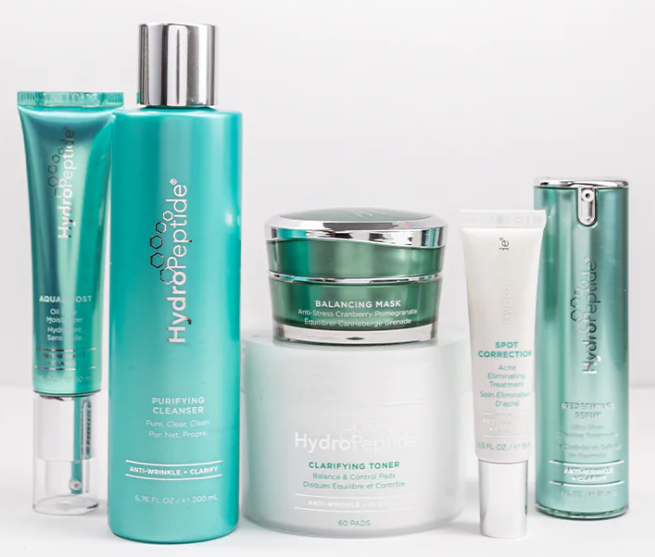
Retrieved from HydroPeptide.ca
References
Bissett, D. (n.d.). Topical palmitoyl pentapeptide provides an improvement in photoaged human facial skin. PubMed. Retrieved January 30, 2023, from https://pubmed.ncbi.nlm.nih.gov/18492182/
Hamley, I. W. (n.d.). Collagen stimulating effect of peptide amphiphile C16-KTTKS on human fibroblasts. PubMed. Retrieved January 30, 2023, from https://pubmed.ncbi.nlm.nih.gov/23320752/
Hayden, K. (n.d.). The Science Behind Skincare. Amazon.
Kim SH., , Jo SD, Lee JE, Cho D, Wang SY, Kim H, Kwak G, Yoon HY,, & Kwon IC. (2018). Development of Biocompatible HA Hydrogels Embedded with a New Synthetic Peptide Promoting Cellular Migration for Advanced Wound Care Management. https://pubmed.ncbi.nlm.nih.gov/30479928/
Kristensen M,, & Nielsen HM. (2016). ell-penetrating peptides as tools to enhance non-injectable delivery of biopharmaceuticals. https://pubmed.ncbi.nlm.nih.gov/27358757/
Vinson, T. (2021). skinformation (1st ed.). Wiley.
TÌM HIỂU SỰ THẬT VỀ "PEPTIT"
Peptide đang là xu hướng trong ngành chăm sóc da hiện nay, chúng đóng vai trò quan trọng trong hoạt động của cơ thể chúng ta. Chúng tham gia vào nhiều quá trình bao gồm điều hòa hormone, truyền tín hiệu tế bào và hình thành protein. Trong bài viết trên blog này, chúng ta sẽ đi sâu vào thế giới của peptide, khám phá cấu trúc, chức năng và ứng dụng tiềm năng của chúng trong y học và khoa học. Từ việc phát hiện ra các peptit đến việc sử dụng chúng trong các lĩnh vực khác nhau, bài viết này nhằm mục đích cung cấp một cái nhìn tổng quan toàn diện về các hợp chất sinh học hấp dẫn này trong ngành chăm sóc da.
Peptide là gì? Và tại sao Peptide lại quan trọng trong chăm sóc da?
Peptide là phân tử gồm hai hay nhiều axit amin liên kết với nhau bằng liên kết peptit. Chuỗi axit amin lớn hơn được gọi là polly peptide (Hayden). Peptide là nền tảng cấu trúc của protein và đóng vai trò quan trọng trong nhiều quá trình sinh học, bao gồm truyền tín hiệu tế bào, điều hòa biểu hiện gen và chuyển hóa (Hayden).
Trong chăm sóc da, Peptide là các chuỗi axit amin nhỏ được sử dụng làm thành phần trong các sản phẩm chăm sóc da. Những peptide này có truyền tín hiệu cho tế bào fiberblast trên da sản xuát ra nhiều collagen, elastin và các protein thiết yếu khác cho da, mang lại vẻ ngoài trẻ trung và rạng rỡ hơn. Chúng có thể cải thiện kết cấu da, độ săn chắc và giảm sự xuất hiện của nếp nhăn (Hamley, n.d.). Một số loại peptide phổ biến được sử dụng trong chăm sóc da bao gồm matrixyl, argireline và palmitoyl pentapeptide. Peptide là một thành phần phổ biến trong nhiều sản phẩm chăm sóc da do hiệu quả của chúng trong việc cải thiện sức khỏe và vẻ ngoài của làn da. Khi bôi trên bề mặt da, peptide có thể thâm nhập vào da và kích hoạt phản ứng sinh học dưới da, khiến chúng trở thành thành phần chăm sóc da mang lại hiệu quả cao (Vinson 79).
Có bằng chứng lâm sàng nào về hiệu quả của peptide không?
Có, đã có rất nhiều nghiên cứu lâm sàng điều tra hiệu quả của peptide trong chăm sóc da. Những nghiên cứu này đã chỉ ra rằng peptide có thể mang lại hiệu quả cao trong việc cải thiện vẻ ngoài và sức khỏe của làn da (Kristensen M, và Nielsen HM).
Ví dụ, các nghiên cứu đã chỉ ra rằng matrixyl, một peptide phổ biến được sử dụng trong các sản phẩm chăm sóc da, có thể cải thiện đáng kể sự xuất hiện của nếp nhăn, cũng như thúc đẩy sản xuất collagen (Hamley, n.d.). Một peptide khác, argireline, đã được chứng minh là làm giảm độ sâu của nếp nhăn và cải thiện độ săn chắc của da. Palmitoyl pentapeptide đã được chứng minh là làm tăng sản xuất collagen và cải thiện độ đàn hồi của da (Bissett). Một loại peptide phổ biến nhất được gọi là “Copper Peptide” được sử dụng trong nhiều sản phẩm chăm sóc da có thể tăng cường sức khỏe của da, bao gồm thúc đẩy sản xuất collagen, giảm viêm và tăng cường chữa lành vết thương (Kim SH. và cộng sự).
Nhìn chung, kết quả của các nghiên cứu lâm sàng đã chỉ ra rằng peptide có thể là một thành phần hiệu quả trong chăm sóc da và chúng có thể tạo ra những cải thiện đáng kể về diện mạo và kết cấu da (Hamley, n.d.). Tuy nhiên, như với bất kỳ thành phần chăm sóc da nào, kết quả của cơ địa từng cá nhân có thể cho kết quả khác nhau, và cần nhiều nghiên cứu hơn để hiểu đầy đủ về lợi ích của peptide trong chăm sóc da.
Nguồn: hydropeptide.ca
Phân loại peptide
Peptide có thể được phân thành nhiều loại dựa trên cấu trúc, chức năng và cơ chế hoạt động của chúng (Vinson 77):
Peptide tín hiệu: Các peptide này đóng vai trò là sứ giả giữa các tế bào để điều chỉnh các quá trình của tế bào.
Peptide enzyme: Những peptide này hoạt động như enzyme, xúc tác các phản ứng hóa học trong da.
Peptide cấu trúc: Những peptide này tạo thành các thành phần cấu trúc của da, chẳng hạn như collagen và elastin.
Neuropeptide: Những peptide này điều chỉnh chức năng thần kinh và cơ trên da.
Peptide kháng khuẩn: Những peptide này cung cấp khả năng bảo vệ tự nhiên chống lại các vi sinh vật có hại trong da.
Các peptide bắt chước: Những peptide này bắt chước tác dụng của các peptide tự nhiên trong da và có thể giúp cải thiện sức khỏe và vẻ ngoài của da.
Peptide tăng trưởng: Những peptide này kích thích sự phát triển và phân chia tế bào, đồng thời thúc đẩy quá trình trẻ hóa làn da. Trong mĩ phẩm các hãng thường hay gọi nó là "Growth Factor", nghe quen lắm phải không ạ?
Peptide có lợi ích gì đối với làn da của bạn ?
Tăng cường sản xuất collagen: Peptide có thể báo hiệu cho da sản xuất nhiều collagen hơn, một loại protein cung cấp cấu trúc và độ săn chắc cho da. Bằng cách tăng sản xuất collagen, peptide có thể giúp cải thiện độ săn chắc và đàn hồi của da, đồng thời làm giảm sự xuất hiện của nếp nhăn một cách tự nhiên.
Kích thích tăng trưởng và sửa chữa tế bào: Peptide cũng có thể giúp kích thích sự phát triển của các tế bào mới và thúc đẩy quá trình chữa lành da. Điều này có thể đặc biệt hữu ích cho những người có làn da bị tổn thương hoặc tình trạng da, chẳng hạn như sẹo mụn hoặc tổn thương do ánh nắng mặt trời.
Giảm viêm: Một số peptide có đặc tính chống viêm và có thể giúp làm dịu da bị kích ứng.
Cải thiện độ ẩm: Peptide cũng có thể giúp cải thiện độ ẩm cho da bằng cách tăng sản xuất axit hyaluronic, một phân tử giúp giữ độ ẩm cho da.
Nhìn chung, việc sử dụng peptide trong chăm sóc da có thể giúp cải thiện vẻ ngoài và sức khỏe của làn da, mang lại làn da trẻ trung, rạng rỡ và khỏe mạnh hơn.
WOW !!! Peptide thực sự là nguyên liệu thần kỳ cho làn da của bạn phải không? Tại spa của Skin4Life Beauty Bar, chúng tôi tự hào khi sử dụng các sản phẩm của HydroPeptide (có kết quả khả quan về nghiên cứu lâm sàng giúp cải thiện làn da) trong các liệu trình chăm sóc da tại đây.
Hãy đặt lịch hẹn ngay hôm nay để giúp làn da của bạn được chăm sóc tốt nhất.

Comments